What is a Sleep Study?
What is a sleep study?
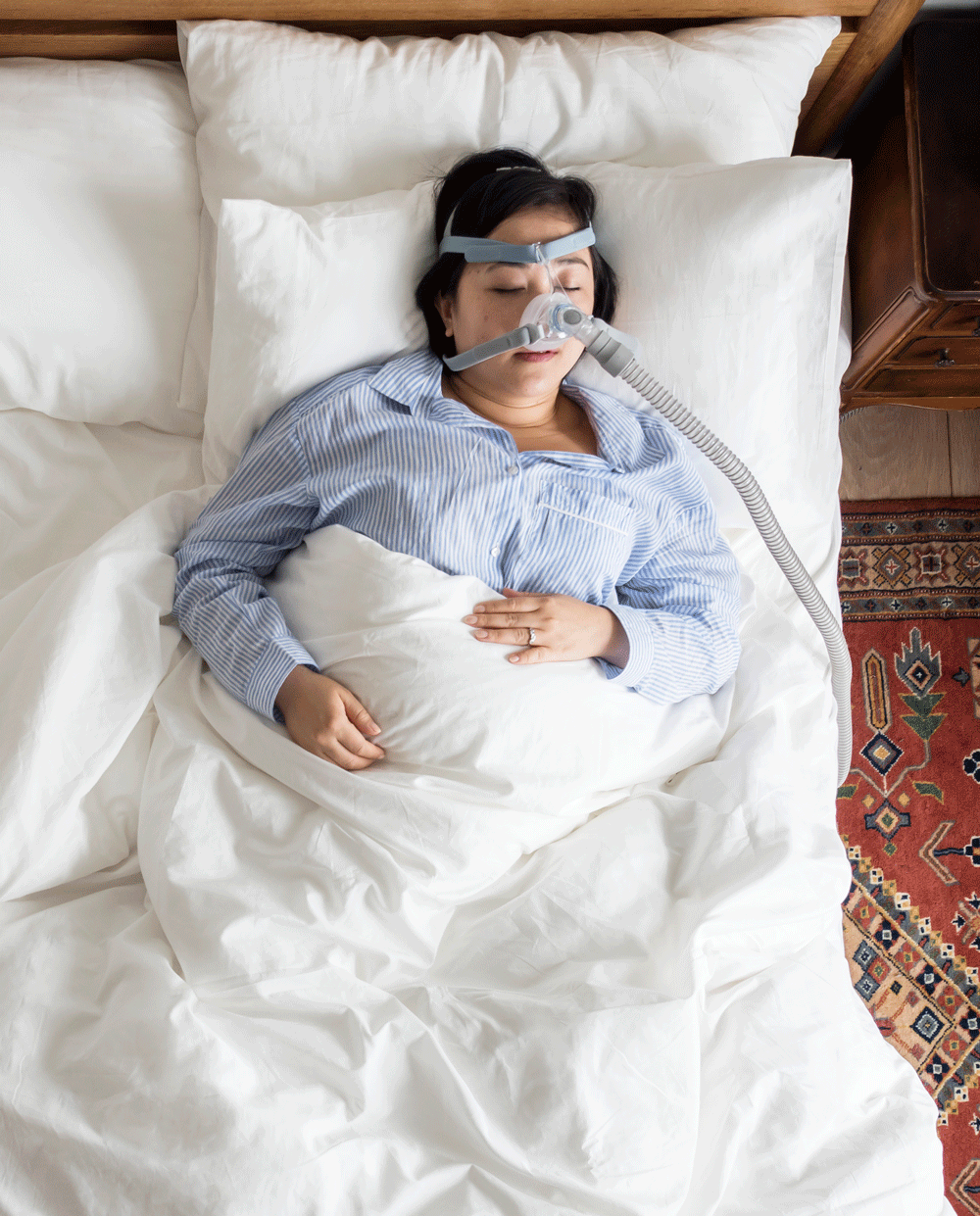
If your doctor suspects you have sleep apnea or another sleep disorder, he/she will prescribe a sleep study in a sleep lab. Patients typically arrive at the sleep lab in the early evening and leave the next morning. Each patient has a comfortable, private room. Our objective is to provide a natural sleeping environment with hotel-like accommodations.
The sleep study, also called a polysomnogram, records brain activity, eye movement, oxygen and carbon dioxide blood levels, heart rate and rhythm, breathing rate and rhythm, the flow of air through your mouth and nose, snoring, body muscle movements, and chest and belly movement. The results are used to determine if you have one or more of the 80 sleep disorders that can interfere with your good night’s sleep.

What happens during a sleep study?
Your technician will fit you with sensors to monitor your sleep:
- An oximeter to measure how your blood oxygen levels change during sleep (blood oxygen levels decrease during apnea episodes).
- Electromyography (EMG) to measure the activity of the muscle groups around your chin, lower leg (tibia) and eyes.
- Electrooculography (EOG) to measure eye movement, which are slower when you are in rapid eye movement sleep (REM sleep).
- Electrocardiography (EKG, ECG) to measure the electrical activity of your heart.
- Electroencephalography (EEG) to measure brain wave activity to determine the different stages of sleep.
- Brain wave patterns also can be used to tell when you are in REM sleep.
- Chest plethysmography to measure chest wall movements, which shows when you are taking a breath. This helps determine if you stop breathing or have slower breathing during sleep and how often this happens.
- In addition, a video camera records how long it takes you to fall asleep and monitors your body movements during sleep, such as if your arms or legs kick or jerk during sleep.
You may feel like a “bionic” person with all these wires attached to you. However, when it’s “lights out,” patients are usually able to sleep normally.
What do you need for a sleep study?
- Two-piece pajamas. If you do not have two-piece pajamas, shorts or sweats and a tee shirt will work fine.
- Any medications you take right before you go to bed or when you get up – bring them with you.
- We have shampoo, soap, and towels.
- Any other items you need, you will need to bring them with you.
- Wash your hair with shampoo only; no conditioner, hair spray, or styling gel, and no make-up.
- No caffeine after 2:00 PM the day of your study.If you would like, you may bring some reading material.
- If you have a favorite pillow you like to sleep on, feel free to bring it with you.
- There is a shower here for the next morning
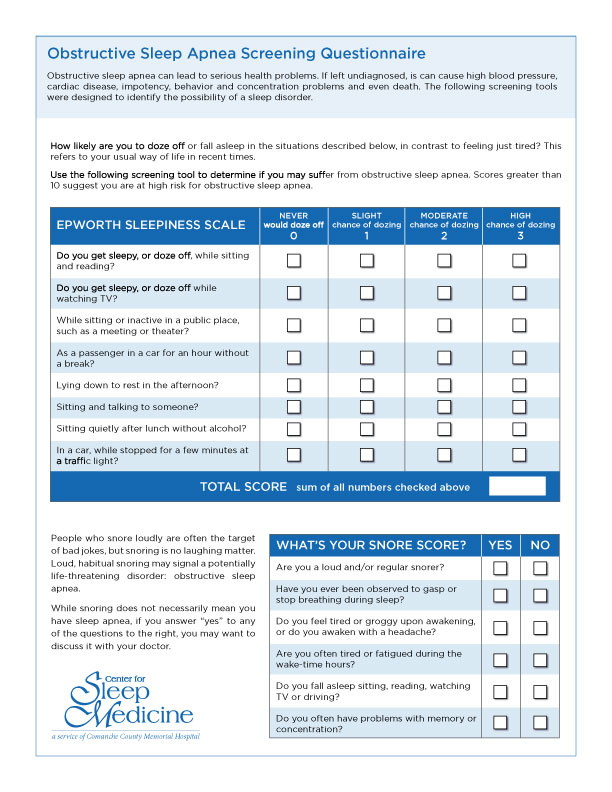
Sleep Apnea Screening Tool
Answer the following questionnaire to identify the possibility of a sleep disorder. If you score higher than a 10 in the first section and answer “yes” to any of the questions in the second section, you may want to discuss it with your doctor.
PLEASE NOTE: This form is a tool and is NOT a diagnosis. If you meet the criteria listed above, please make an appointment to discuss the results with your Memorial provider.
Effects of Obstructive Sleep Apnea
Blood Pressure
OSA can greatly increase blood pressure during an apnea.
Alertness
OSA can cause a decrease in alertness due to fragmented sleep and poor sleep quality.
O2 Sats
OSA will cause oxygen saturations to drop after an apneic event.
Mood
OSA can greatly effect mood by disrupting REM stage and from fatigue.
Weight
OSA can cause a gradual increase in weight due to slowed metabolism and decrease in activity.
Pulse
OSA can cause bradycardia during an apnea and then tachycardia after the event.
Headache
OSA can cause an increase in early morning headaches due to a buildup of CO2.
Tips for Better Sleep

Build Up Your Need For Sleep
- Avoid Naps – if you must nap, limit it to 10-25 minutes and only after you have been awake for at least 8 hours.
- Don’t Over Sleep – too much time in bed can make it harder to sleep the next night.
- Exercise – go for an exercise that makes you sweat. Do it for at least 30-40 minutes, do it at least 6 hours before bedtime.
- Heat Up Before Bed – try a hot bath or hot drink (no caffeine) within 2 hours before bedtime.
Time and Light
- Get Out of Bed – same time every day.
- Get Early Light – sunshine or very bright light within 30 minutes after getting out of bed.
- Keep It Dark at Night – avoid bright light if you have to get up at night.
Tobacco, Alcohol and Caffeine
- Don’t smoke at all, if possible.
- Don’t smoke after 7:00 pm.
- Don’t smoke at night.
- Avoid caffeine completely for 1 month, if possible.
- Limit caffeine to 3 doses or less before 10:00 am.
- Keep alcohol use light – alcohol breaks up the second half of your sleep cycle.
Avoid arousing stuff
- Keep your clock turned away from your bed.
- Avoid strenuous exercise 6 hours before bedtime.
- Keep food and drink very light for 3 hours before bed.
- Keep your bedroom dark, quiet and just the right temperature.
- Eyeshades and earplugs are OK to use.
- Get a bed and pillow just right for you.
- Bed is for sleep or sex only – No working in bed!
- Create a bedtime ritual.
- Learn some relaxation techniques.
- Make to-do lists, then set the list aside for morning.
- Let worry go.
- Forgive yourself and others.
Contact Us

Phone

Address
Lawton, OK 73505